Intro
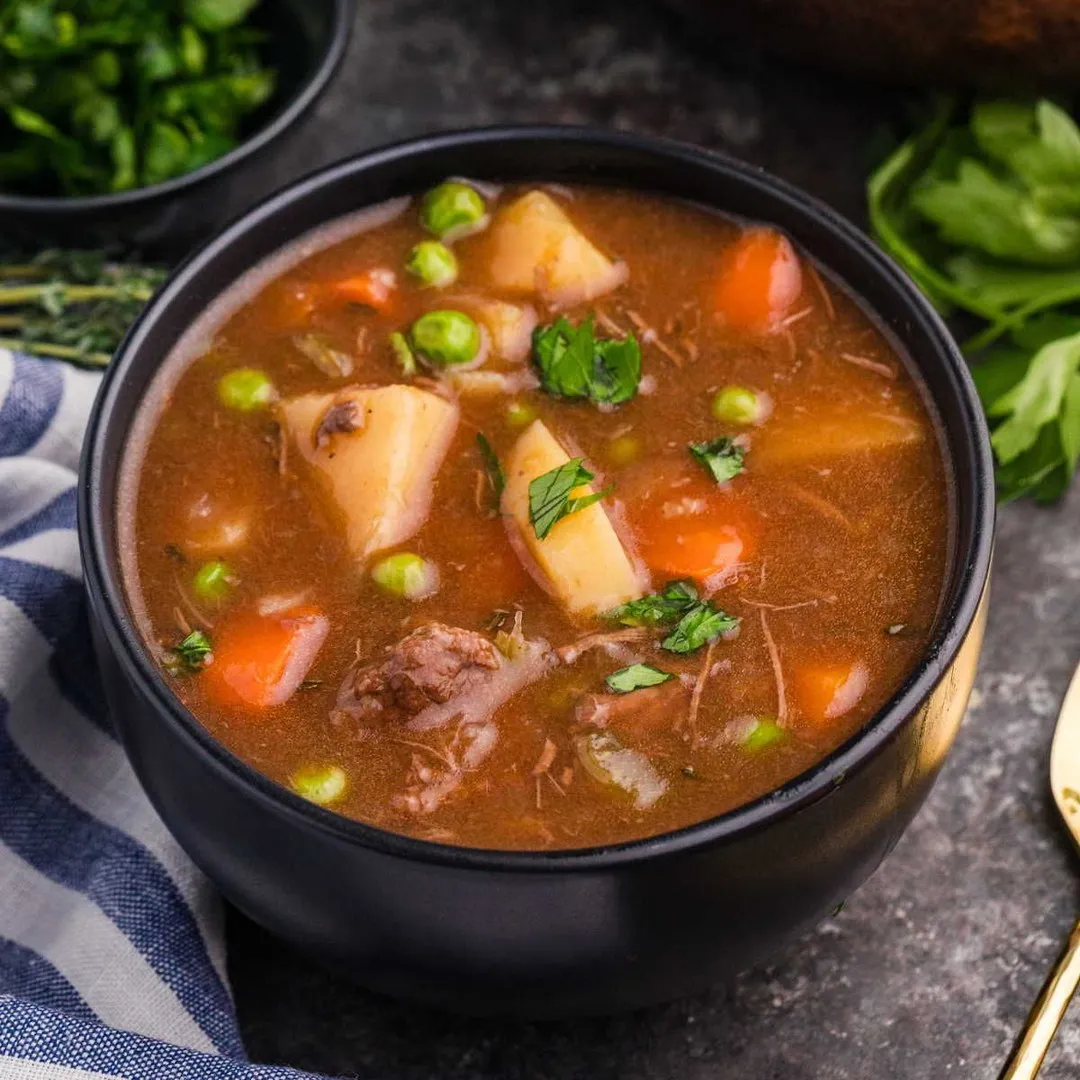
There’s nothing quite like a bowl of Old Fashioned Beef Stew when you want a meal that feels warm, hearty, and comforting. Tender chunks of beef simmer slowly with potatoes, carrots, celery, and sweet pearl onions in a rich, savory broth. Garlic, tomato paste, Worcestershire sauce, paprika, herbs, and a touch of allspice give the broth plenty of depth, while a simple two-stage cornstarch method creates a beautifully thick consistency.
Despite taking around two hours, this is an easy recipe because most of the cooking time is hands-off. Once the beef is browned and the vegetables are prepared, everything simmers together until the meat becomes fork-tender. The finished stew is filling enough to serve as a complete dinner and pairs wonderfully with crusty bread for soaking up every bit of the flavorful broth.
Old Fashioned Beef Stew Ingredients
The ingredients for this Old Fashioned Beef Stew are simple and easy to find. For the best texture, choose beef with enough marbling to stay tender during slow cooking.
- 2 pounds beef chuck roast or stew meat, cut into 1-inch cubes
- 1/4 cup cornstarch, divided
- 1 teaspoon salt, plus more to taste
- 1/2 teaspoon black pepper, plus more to taste
- 2 tablespoons vegetable oil
- 3 cloves garlic, minced
- 2 tablespoons tomato paste
- 4 cups beef broth
- 2 tablespoons Worcestershire sauce
- 1 pound potatoes, peeled and cut into chunks
- 8 ounces pearl onions, fresh or frozen
- 3 carrots, peeled and sliced
- 2 celery stalks, sliced
- 1 tablespoon granulated sugar
- 1 teaspoon dried basil
- 1 teaspoon dried oregano
- 1 teaspoon dried parsley
- 1 teaspoon paprika
- 1/4 teaspoon ground allspice
- 1/4 cup cold water
The cornstarch is divided between two stages. Some coats the beef before searing, while the remaining portion is combined with cold water and added near the end to thicken the broth. This gives the stew a rich texture without making the sauce overly heavy.
How To Make Beef Stew
1. Prepare the beef.
Place the cubed beef in a large bowl. Sprinkle with salt, pepper, and about half of the cornstarch. Toss until the beef is evenly coated.
2. Brown the beef.
Heat the vegetable oil in a large Dutch oven over medium-high heat. Add the beef in batches, making sure not to overcrowd the pot. Brown the pieces on all sides, then transfer them to a plate.
3. Cook the aromatics.
Add the minced garlic and tomato paste to the same Dutch oven. Cook for about 1 to 2 minutes, stirring frequently, until the garlic becomes fragrant and the tomato paste begins to deepen in color.
4. Deglaze the pot.
Pour in the beef broth and Worcestershire sauce. Use a wooden spoon to scrape the browned bits from the bottom of the pot and stir them into the liquid.
5. Add the vegetables.
Return the browned beef to the pot. Add the potatoes, pearl onions, carrots, celery, sugar, basil, oregano, parsley, paprika, and allspice. Stir everything together.
6. Simmer slowly.
Bring the stew to a boil, then reduce the heat to low. Cover the Dutch oven and simmer for 90 to 120 minutes. Stir occasionally while the stew cooks.
7. Check the beef.
The beef is ready when it is very tender and can be pierced easily with a fork. If the meat is still tough, continue simmering until it reaches the desired tenderness.
8. Make the slurry.
Whisk the remaining cornstarch with 1/4 cup cold water in a small bowl. Mix until completely smooth and free of lumps.
9. Thicken the broth.
Slowly pour the cornstarch slurry into the simmering stew while stirring. Continue cooking for several minutes until the broth becomes thick, smooth, and velvety.
10. Finish and serve.
Taste the stew and adjust the salt and pepper as needed. Ladle into bowls and serve hot with crusty bread, biscuits, or dinner rolls.
Choose The Best Beef
Chuck roast is one of the best choices for Old Fashioned Beef Stew because it contains enough marbling and connective tissue to handle a long cooking time. As the beef gently simmers, the connective tissue gradually breaks down, producing those tender pieces that practically fall apart when cut with a fork.
You can also use packaged stew meat from the grocery store. Other options include bottom round, top round, or brisket. However, very lean cuts are more likely to become dry during extended cooking. If you are cutting the beef yourself, aim for pieces around one inch in size so they cook evenly and remain substantial after simmering.
Use Frozen Pearl Onions
Pearl onions are one of the ingredients that make this stew especially appealing. Their small size and mild sweetness add a pleasant contrast to the savory beef broth. They also retain more of their shape than regular chopped onions, giving the finished dish little bites of sweet onion throughout.
Frozen pearl onions are particularly convenient because they are already peeled and ready to use. Fresh pearl onions are also delicious when available, but they require more preparation. If neither option is available, chopped yellow or white onion can be substituted. The stew will still taste wonderful, although you will lose the distinctive appearance and texture of whole pearl onions.
Master The Cornstarch Method
The two-stage cornstarch technique is an easy way to give the stew a thick, satisfying consistency. The first portion of cornstarch coats the seasoned beef before it goes into the Dutch oven. As the beef sears, the coating helps create a flavorful exterior and contributes some natural thickening to the broth as the stew cooks.
The second portion is reserved for the end. Mixing cornstarch with cold water creates a slurry that can be added gradually to the hot stew. Never add dry cornstarch directly to the simmering liquid because it can form unpleasant lumps. Stir the slurry in slowly and allow the stew to simmer for a few minutes. Stop once the broth reaches a smooth, rich consistency.
Keep The Beef Tender
The most important rule for tender beef is to cook it slowly. After bringing the stew to a boil, reduce the heat and let it gently simmer. A vigorous boil can make the beef tougher instead of giving the connective tissue enough time to soften gradually.
Do not worry if the beef needs longer than the suggested cooking time. Cooking times can vary depending on the cut and size of the beef pieces. If the meat is still chewy after 90 minutes, continue simmering and check it periodically. When a fork slides easily into the beef and the pieces feel tender rather than rubbery, the stew is ready.
Serve Beef Stew
A bowl of Old Fashioned Beef Stew is satisfying on its own because it already contains tender beef, potatoes, carrots, celery, and onions. Still, serving it with something that can soak up the broth makes the meal even better. Crusty French bread, homemade biscuits, soft dinner rolls, or toasted sourdough are all excellent choices.
For a lighter side, serve the stew with a simple green salad or steamed vegetables. Fresh parsley sprinkled over each bowl can also add a little brightness to the rich dish. Serve the stew while it is hot, making sure every bowl gets plenty of beef, vegetables, and that thick, flavorful broth.
Store And Reheat
Leftover beef stew stores very well, making this recipe useful for meal prep and make-ahead dinners. Allow the stew to cool appropriately before transferring it to airtight containers and refrigerating it. Properly stored leftovers can be reheated gently on the stovetop or in the microwave.
The broth may become noticeably thicker after refrigeration because the cornstarch continues to set as it cools. If necessary, add a small splash of beef broth or water while reheating and stir until the desired consistency returns. Reheat the stew gently rather than boiling it aggressively so the beef remains tender and the vegetables do not become unnecessarily soft.
Helpful Cooking Tips
- Brown the beef in batches: Overcrowding the Dutch oven can cause the beef to steam instead of sear.
- Scrape the browned bits: Deglazing the pot helps incorporate concentrated flavor into the broth.
- Use cold water for slurry: Cold water helps the cornstarch dissolve smoothly.
- Do not rush the simmer: Tough beef usually needs more time, not higher heat.
- Cut vegetables evenly: Similar-sized pieces cook more consistently.
- Taste before serving: Adjust salt and pepper after thickening the broth.
- Use pearl onions: Frozen pearl onions are an easy shortcut and add a distinctive sweet flavor.
Recipe At A Glance
Recipe: Old Fashioned Beef Stew
Prep Time: About 20–30 minutes
Cook Time: About 90–120 minutes
Total Time: Approximately 2 hours
Servings: About 6 servings
Cooking Method: Dutch oven / stovetop
Best For: Family dinners, cold evenings, meal prep, and comfort-food cravings
Frequently Asked Questions
What beef is best for stew?
Chuck roast is an excellent choice because its marbling and connective tissue help it become tender during slow cooking. Packaged stew meat can also be used.
Can I use regular onions?
Yes. Chopped yellow or white onions can replace pearl onions. The flavor will still work well, although the finished stew will have a different texture.
Why is my beef still tough?
The beef probably needs more cooking time. Continue simmering gently until it becomes fork-tender. Avoid turning the heat very high.
How do I thicken beef stew?
Make a cornstarch slurry by mixing cornstarch with cold water. Slowly stir it into the simmering stew and cook for a few minutes until the broth thickens.
Can I make beef stew ahead?
Yes. Beef stew is an excellent make-ahead meal. Store it in the refrigerator and gently reheat it before serving.
What goes well with beef stew?
Crusty bread, biscuits, dinner rolls, and simple green salads all pair nicely with beef stew. Bread is especially good for soaking up the rich broth.
Can I freeze beef stew?
Yes, beef stew can generally be frozen in airtight, freezer-safe containers. Thaw it safely before reheating and add a little broth or water if the consistency becomes too thick.
Final Thoughts
This Old Fashioned Beef Stew delivers everything you want from a traditional comfort-food dinner: tender beef, hearty vegetables, sweet pearl onions, and a deeply savory broth with just the right amount of thickness. The combination of slow simmering and the two-stage cornstarch method creates a texture that feels rich and satisfying without being overly heavy.
It is also a practical recipe for busy cooks because most of the total cooking time requires very little hands-on work. Prepare the ingredients, brown the beef, combine everything in the Dutch oven, and let the stew slowly develop its flavor. Serve it with warm crusty bread for an easy homemade dinner that is especially comforting on cool days.